






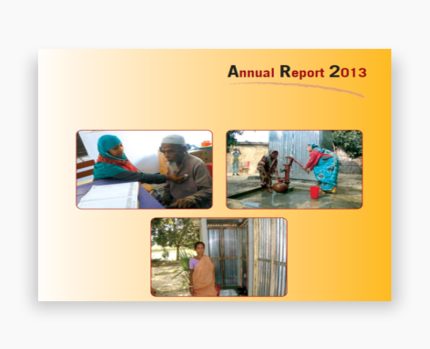
DASCOH – earlier known as Development Association for Self-reliance, Communication and Health (DASCOH) – is a Bangladeshi NGO focusing on improved water supply, sanitation and local government effectiveness. The Sustainable Solution for the Delivery of Safe Drinking Water Project (henceforth SDSD) is one of its long-running projects. Supported by the Swiss Agency for Development and Cooperation (SDC), DASCOH embarked on it in 2004, at first in the western region of the country. In March 2011 DASCOH started SDSD activities in the northern district of Sunamganj, one of the poorest areas in the country. It has since been active in 25 Unions (communes) in four of the currently eleven Upazila (sub-districts) of the district.
The SDSD works in close cooperation with the local government tier known as Union Parishad. It emphasizes water and sanitation as entry points to improving Parishad services. The collaboration is guided by the principles of social inclusiveness, gender equity, institutional and environmental sustainability as well as disaster risk reduction. SDSD field workers liaise with multiple actors of the WatSan realm – councils, local committees at the electoral-ward and village levels, contractors and maintenance workers, other NGOs, as well as with the interested consumer households.
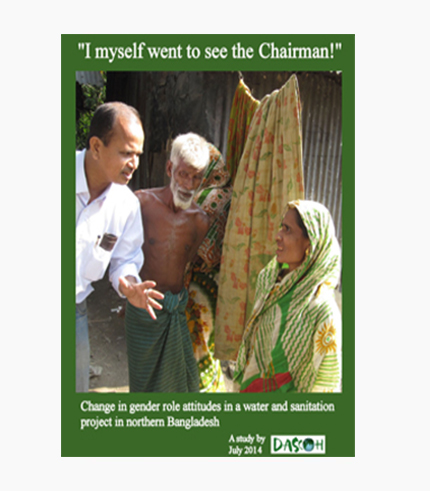
This study is specifically concerned with the relationship between SDSD and gender equity. Gender equity concerns arise at several organizational levels. In the households affected by the project, access to improved facilities by men, women and children may impact traditional gender role attitudes and, concomitantly, the actual gendered division of labor and thus women’s and girl’s workloads. In the village community, successful WatSan improvements strengthen inter-household cooperation, give greater scope for women’s voice (such as in deliberations on siting new and maintaining existing facilities), and exert pressures for more equitable social control (such as by discouraging open defecation for all, by involving adults of both genders in facility maintenance). In ward committee and Union Parishad deliberations, women’s participation, together with the open-budget and open-procurement policies advocated by DASCOH, make for greater transparency and stronger focus on underserved segments of the community. Finally, DASCOH, by employing more women and encouraging communities to support more female volunteers, contributes to changing gender relationships by its own example.
elibrary –
Very nice book